| Curriculum, teaching and support |
 Blog Home Blog Home
 All Blogs All Blogs
|
|
Guidance, ideas and examples to support schools in developing their curriculum, pedagogy, enrichment and support for more able learners, within a whole-school context of cognitively challenging learning for all. Includes ideas to support curriculum development, and practical examples, resources and ideas to try in the classroom. Popular topics include: curriculum development, enrichment, independent learning, questioning, oracy, resilience, aspirations, assessment, feedback, metacognition, and critical thinking.
Top tags: pedagogy questioning enrichment research oracy curriculum independent learning aspirations cognitive challenge free resources KS3 KS4 critical thinking language literacy assessment English feedback metacognition resilience collaboration confidence maths creativity vocabulary wellbeing access lockdown mindset reading
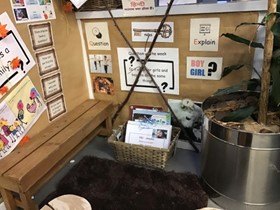
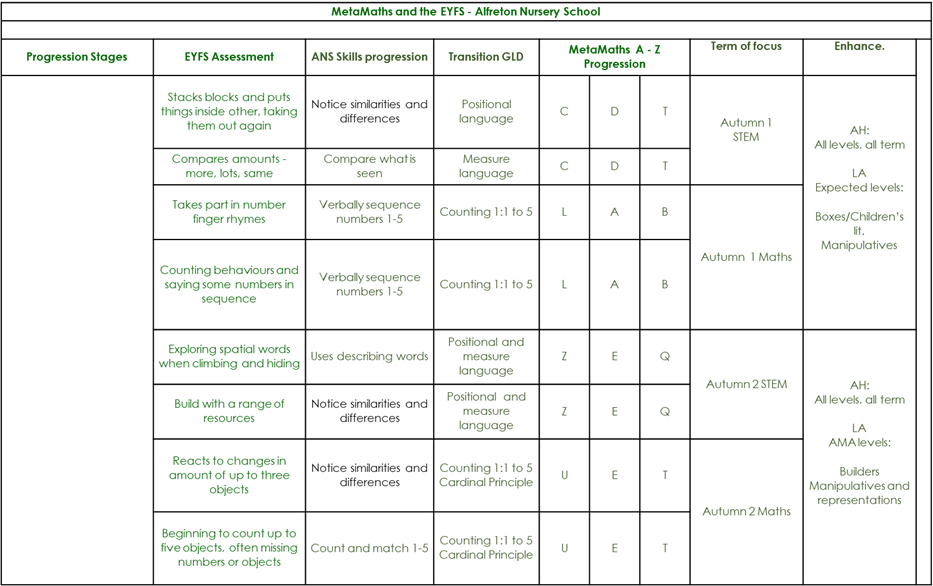
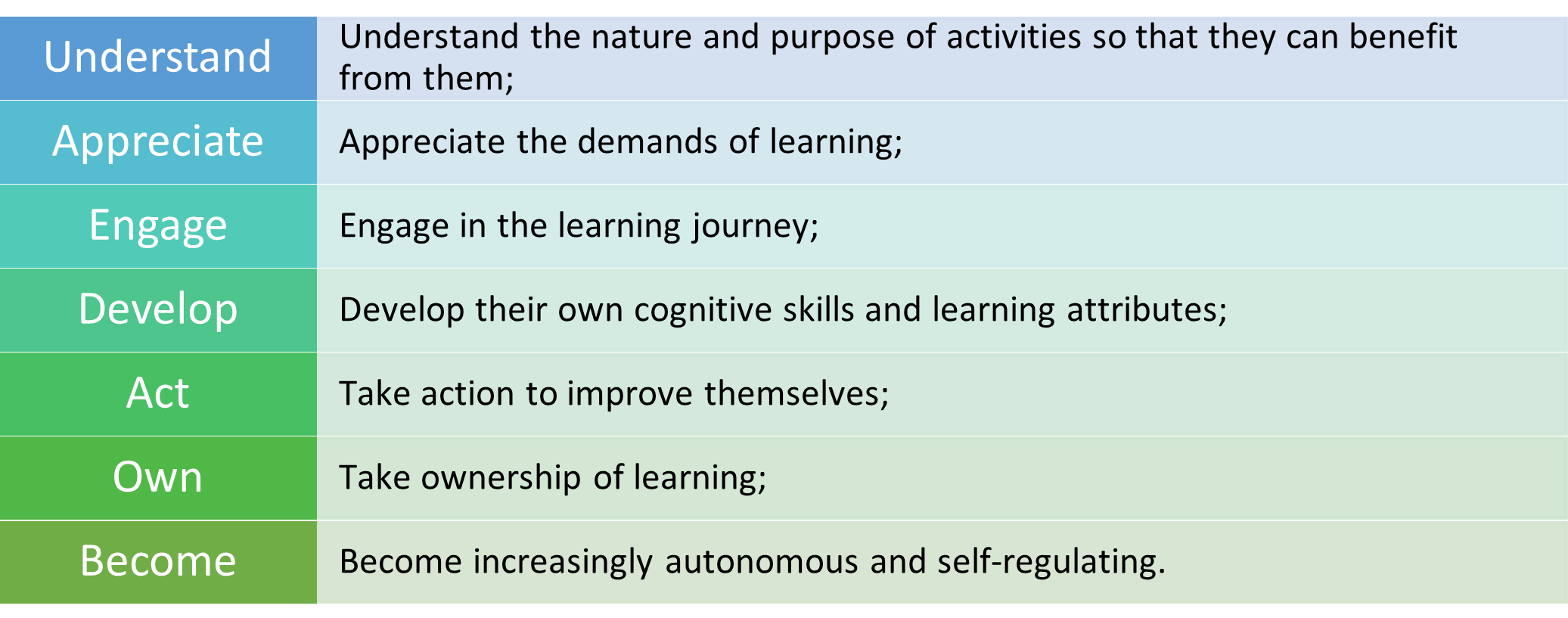
Adults in school use metacognitive terms when talking freely to each other, exposing children to their natural use. Missed opportunities are openly shared within the teaching team, supporting future developments. Within enrichment groups, metacognition is a transparent process of learning. Children are given metacognitive strategies at the beginning of enhancement opportunities and encouraged to reflect and evaluate at the end. Whether working indoors or outdoors, with manipulatives or abstract concepts and individually or in a group, metacognition is a vehicle through which all learners can access lesson content. We use the ‘Thinking Moves’ metacognition framework (you can read more about this here). Creative application of this framework supports the combination of metacognition words, to make strings of thinking strategies. For example, a puppet called FRED helps children to Formulate, Respond, Explain and Divide their learning experiences. A QUEST model helps children to follow a process of Questioning, Using, Explaining, Sizing and Testing.
Metacognition supports children of all abilities, ages and backgrounds, to overcome barriers to learning. Disadvantage is thus reduced. Moving from intent to implementation
|
||||||||||||||||||||||||||||||||||||||
  
Embedding oracy education across the curriculum |
||||||||||||||||||||||||||||||||||||||
|
Posted By Liza Timpson-Hughes,
11 November 2024 |
||||||||||||||||||||||||||||||||||||||
Liza Timpson-Hughes, Assistant Headteacher at Samuel Ryder Academy, explains how the school and its Trust have embedded oracy education across the curriculum – empowering learners with skills to help them thrive both within and beyond the classroom.
Samuel Ryder Academy is an all-through school and has connected oracy to the development of activating “hard thinking” since 2021. The school is in its third year of working with both NACE and Voice 21, is using the NACE Challenge Framework and was accredited as a Voice 21 Oracy Centre of Excellence in January 2024. Oracy leads and champions are strategically developing talk across all key stages, many of which are now contributing to the implementation of oracy education across the Scholars Educational Trust – a diverse family of 11 schools covering all phases from nursery through to sixth-form.
The focus on developing oracy expertise has strengthened school culture, student experience and staff understanding of challenge in learning. Upon agreeing to focus on oracy, a strong curriculum intent was formed by a group of committed and experienced teachers:
Our oracy curriculum further enables children to speak with confidence, clarity and fluency. This provides them the opportunity to adapt their use of language for a range of different purposes and audiences. It emphasises the value of listening and the ability to interpret and respond appropriately to a range of listening activities. This will be supported by the four key strands of the oracy framework (physical, linguistic, cognitive and social and emotional).
For high-ability students, this focus on oracy matters, because it equips students with the tools they need to succeed academically while also fostering well-rounded individuals who can contribute positively to society. High-ability students often benefit from opportunities to articulate their thoughts and ideas clearly. Engaging in structured discussions and debates allows them to refine their communication skills. We do not only use language to interact, but we also use it to ‘interthink’ (Littleton & Mercer, 2013). Contrary to popular beliefs about ‘lone geniuses’, it is increasingly accepted that effective learning is through collaboration and communication in small groups.
Embedding oracy skills across the curriculumA great oracy school not only prioritises the development of speaking and listening skills, but also creates a culture where these skills are essential to the learning process. We recognised as a Trust that skills of spoken language and communication do not need to be taught as part of a discrete “oracy lesson” and can be developed effectively as part of well-designed subject curricula. We strongly believed in connecting oracy to our academy development plan and in the value of departments having the autonomy to decide the most effective balance for their own context, ensuring a comprehensive approach to oracy without compartmentalising it into ad hoc basis.
All teachers were asked to plan for oracy episodes in their subject areas at a sequence point they felt worked. There are numerous ways oracy can be integrated into the curriculum. Millard and Menzies (2016) highlight the importance of demonstrating the connection between high-quality talk and academic rigour. Whole-school oracy scaffolds can be used across the curriculum, thus reducing workload for classroom teachers. Additionally, our trained teacher oracy champions offered wider pedagogical support on these oracy scaffolds. They modelled best practice in fortnightly teaching and learning briefings.
Oracy scaffolds to develop classroom talkUsing the Voice 21 Oracy Framework as a springboard, we agreed to focus on scaffolding oracy skills across every subject, building a learning environment in which students could clearly express their thoughts and effectively communicate ideas, whilst understanding what features constituted oracy.
In each subject, teachers prioritised the development of social and emotional skills; central to this was an emphasis on active listening, contributing to a deeper comprehension and retention of information. By actively engaging with peers and teachers, students can enhance their understanding of complex concepts and improve their critical thinking skills.
We first experimented with games and lesson starters using oracy formats and debating ideas from Voice 21. The following approaches have been valuable in every classroom and at every key stage in supporting the development of oracy skills as part of cognitively challenging learning experiences.
Public speaking practiceStudent anxiety around speaking in front of others can deter teachers from incorporating oracy-based activities into lessons. Oracy education has given us a consistent language and a structure to help students as they approach presentational work.
Students were supported to deliver presentations or take part in debates by using bespoke/ age-related versions of the Voice 21 framework. Oracy champions asked students to suggest topics they felt most confident and comfortable with to start their practice. We have ‘Talk Tuesdays’ where all form time and lessons start with a talk-based task.
By establishing clear expectations for classroom talk, students felt more confident to present. These ‘ground rules’ were co-constructed with the students and regularly reviewed. The creation of safe and supportive classrooms was greatly valued by students and necessary before presentational talk. Gradual low-stakes oracy allowed confidence to evolve. Students were then invited to co-present assemblies, address different stakeholders, facilitate student cabinets and student leadership panels, and by sixth form they mastered the skills to deliver TEDx talks.
In geography, for example, students understand that there are different elements to a successfully delivered presentation, whether this was a news report on wildfires filmed on their iPad or a formal presentation to the class on a sustainable city they have designed. Students focused not just on the content (cognitive), but also on their physical and linguistic abilities. Students are delivering much higher-quality work, with much greater confidence, because they understand and consider all the different features. They are also engaging much more with peer feedback, as again we have given them a consistent language to help them evaluate each other’s work.
Teachers discussed the different types of talk that are engaged in group discussions and started to consider ways in which we could encourage more exploratory talk. We wanted to build the students’ skills in employing exploratory talk, and to ‘give permission’ for teachers and students to employ it.
Dialogic learning communitiesIncreased confidence in exploratory and presentational talk has allowed teachers to consider dialogic learning. Dialogue means being able to articulate ideas seen from someone else’s perspective; it is characterised by chains of (primarily open) questions and answers; it may be sustained over the course of a single lesson or across lessons; and it builds on the idea of ‘exploratory talk’, where learners construct shared knowledge and are willing to change their minds and critique their own ideas (Prof. Neil Mercer, 2000). Our teachers are being encouraged to consider where this fits in their pedagogy, classrooms and curriculum.
Noticeably in maths and RS lessons, the resources provided by Voice 21 have been crucial to create and develop a dialogic culture. We have shared with all students discussion guidelines, talk like a mathematician/philosopher sentence starters, as well as student talking tactics. These resources are displayed in classrooms and have been uploaded digitally onto students’ devices. There is deliberativeness of the dialogue between teachers and students. Seeing rich mathematical or philosophical talk in action surfaced several practices that we believe deepen thinking and strengthen subject content. Linking language to the creativity of mathematical thinking and practices encourages students to use talk as a tool for generating new ways of approaching problems, rather than simply to internalise existing methods and just being compliant passengers.
A stronger voice within and beyond the classroomSenior leaders play a key role in supporting teachers to develop this oracy knowledge. We provided oracy-specific training for all teaching and support staff. Space was identified for colleagues to share and evaluate the best tools over time. We were particularly interested in understanding how oracy skills promoted greater depth of subject knowledge. The development of oracy skills is most effective when it is integrated into a whole-school approach, endorsed and prioritised by the senior leadership team. But identification of early shifters and adopters was crucial in forming a strong of teacher oracy champions.
For teachers, the shift is noticeable in the modelling of talk they expect from students, scaffolding their responses and interactions and providing timely and specific feedback. It was vital to consider how to approach the teaching of ‘active listening’ in classrooms. We recognised that an oracy-centred approach can be of great value in all subjects but may need adapting to suit the subject area and age of learners.
Since prioritising oracy there is nothing forced or artificial about the classroom conversation; students engage positively with explicit strategies for talk. Students talk about how oracy education has given them increased confidence, a voice for learning and beyond the classroom, and supports their wellbeing. They know this will help them throughout educational transitions and ultimately in the wider world. It is empowering. The impact is evident, not only on high-achieving students but across the entire school culture.
References and further reading
Tags: cognitive challenge confidence language oracy pedagogy questioning student voice wellbeing |
||||||||||||||||||||||||||||||||||||||
Environmental education in the early years: intent, implementation, impact |
||||||||||||||||||||||||||||||||||||||
|
Posted By Amanda Hubball,
17 April 2023 Updated: 17 April 2023 |
||||||||||||||||||||||||||||||||||||||
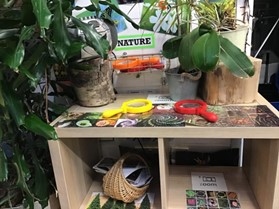
NACE Associate Amanda Hubball, Deputy Head and More Able Lead at Challenge Award-accredited Alfreton Nursery School, explains why and how environmental education has become an integral part of provision in her early years setting. 1. What’s the intent?The ethics of teaching children of all ages about sustainability is clear. However, teaching such big concepts with such small children needs careful thought. The intention at Alfreton Nursery School is to stimulate an enquiring mind and to nurture children to believe in a solutions-based future. Exposure to climate change from an adult perspective is dripping into our children’s awareness all the time. At Alfreton Nursery School we believe it is so important to take the current climate and give children a voice and a role within it. The invincibility of the early years mindset has been harnessed, with playful impact. 2. How do I implement environmental education with four-year-olds?Environment Just as an effective school environment supports children’s mathematical, creative (etc) development, so our environment at Alfreton is used to educate children on the value of nature. The resources we use are as ethically made and resourced as possible. We use recycled materials and recycled furniture, and lights are on sensors to reduce power consumption. Like many schools, we have adapted our environment to work with the needs of the planet, and at Alfreton we make our choices explicit for the children. We talk about why the lights don’t stay on all the time, why we have a bicycle parking area in the carpark and why we are sitting on wooden logs, rather than plastic chairs. Our indoor spaces are sprinkled with beautiful large plants, adding to air quality, aesthetics and a sense of nature being a part of us, rather than separate. Incidental conversations about the interdependence of life on our planet feed into daily interactions. Our biophilic approach to the school environment supports wellbeing and mental health for all, as well as supporting the education of our future generations. Continuous provision and enhancements Within continuous provision, resources are carefully selected to enhance understanding of materials and environmental impact. We have not discarded all plastic resources and sent them to landfill. Instead we have integrated them with newer ethical purchasing and take the opportunity to talk and debate with children. Real food is used for baking and food education, not for role play. Taking a balanced approach to the use of food in education feels like the respectful thing to do, as many of our families exist in a climate of poverty. Larger concepts around deforestation, climate change and pollution are taught in many ways. Our provision for more able learners is one way we expand children’s understanding. In the Aspiration Group children are taught about the world in which they live and supported to understand their responsibilities. We look at ecosystems and explore human impact, whilst finding collaborative solutions to protect animals in their habitats. Through Forest Schools children learn the need to respect the woodlands. Story and reference literature is used to stimulate empathy and enquiry, whilst home-school partnerships further develop the connections we share with community projects to support nature. We have an outdoor STEM Hive dedicated to environmental education. Within this space we have role play, maths, engineering, small world, science, music… but the thread which runs through this area is impact on the planet. When engaged with train play, we talk about pollution and shared transport solutions. When playing in the outdoor house we discuss where food comes from and carbon footprints. In the Philosophy for Children area we debate concepts like ‘fairness’ – for me, you, others and the planet. And on boards erected in the Hive there are images of how humans have taken the lead from nature. For example, in the engineering area there are images of manmade bridges and dams, along with images of beavers building and ants linking their bodies to bridge rivers. 3. Where will I see the impact?Our environmental work in school has supported the progression of children across the curriculum, supporting achievements towards the following goals: Personal, Social and Emotional Development:
Understanding the World:
(Development Matters, 2021, DfE) More widely, children are thinking beyond their everyday lived experience and connecting their lives to others globally. Our work is based on high aspirations and a passionate belief in the limitless capacity of young children. Drawing on the synthesis of emotion and cognition ensures learning is lifelong. The critical development of their relational understanding of self to the natural world has seen children’s mental health improve and enabled them to see themselves as powerful contributors, with collective responsibilities, for the world in which they live and grow. Read more: Plus: Tags: cognitive challenge creativity critical thinking curriculum early years foundation stage pedagogy resilience wellbeing |
||||||||||||||||||||||||||||||||||||||
Developing oracy for high achievement: challenges and opportunities |
||||||||||||||||||||||||||||||||||||||
|
Posted By Jonathan Doherty,
13 March 2023 Updated: 07 March 2023 |
||||||||||||||||||||||||||||||||||||||
NACE Associate Dr Jonathan Doherty outlines the focus of this year’s NACE R&D Hub on “oracy for high achievement” – exploring the impetus for this, challenges for schools, and approaches being trialled. This year one of the NACE Research & Development Hubs is examining the theme of ‘oracy for high achievement’. The Hub is exploring the importance of rich and extended talk and cognitive discourse in the context of shared classroom practice. School leaders and teachers participating in the Hub are seeking to improve the value and effectiveness of speaking and listening. They are developing a body of knowledge about provision and pedagogy for more able learners, sharing ideas and practice and contributing to wider research evidence on oracy through their classroom-based enquiries. Why focus on oracy?Oracy is one of the most used and most important skills in schools. To be able to speak eloquently and with confidence, to articulate thinking and express an opinion are all essential for success both at school and beyond. Communication is a vital skill for the 21st century from the early years, through formal education, to employment. It embraces skills for relationship building, resolving conflict, thinking and learning, and social interaction. Oral language is the medium through which children communicate formally and informally in classroom contexts and the cornerstone of thinking and learning. The NACE publication Making Space for Able Learners found that “central to most classroom practice is the quality of communication and the use of talk and language to develop thinking, knowledge and understanding” (NACE, 2020, p.38).
Dialogic teaching’ is highly influential in oracy-rich classrooms (Alexander, 2004). It uses the power of classroom talk to challenge and stretch students. Through dialogue, teachers can gauge students’ perspectives, engage with their ideas and help them overcome misunderstandings. Exploratory talk is a powerful context for classroom talk, providing students with opportunities to share opinions and engage with peers (Mercer & Dawes, 2008). It is not just conversational talk, but talk for learning. Given the importance and prevalence of classroom talk, it would be easy to assume that oracy receives high status in the curriculum, but its promotion is not without obstacles to overcome. Challenges for schools in developing oracy skillsCovid-19 has impacted upon students’ oracy. A report from the children’s communication charity I CAN estimated that more than 1.5 million UK young people risk being left behind in their language development as a result of lost learning in the Covid-19 period (read more here). The Charity reported that the majority of teachers were worried about young people being able to catch up with their speaking and understanding as a result of the pandemic (I CAN, 2021). Another challenge is that oracy is mentioned infrequently in inspection reports. An analysis of reports of over 3,000 schools on the Ofsted database, undertaken by the Centre for Education and Youth in 2021, found that when taken in the context of all school inspections taking place each year, oracy featured in only 8% of reports. The issue of how oracy is assessed is a further challenge. Assessment profoundly influences student learning. Changes to assessment requirements now provide schools with new freedoms to ensure their assessment systems support pupils to achieve challenging outcomes. Despite useful frameworks to assess oracy such as the toolkit from the organisation Voice 21, there is no accepted system for the assessment of oracy. What are NACE R&D Hub participants doing to develop oracy in their schools?
|
||||||||||||||||||||||||||||||||||||||
From differentiation to adaptive teaching: what does this really mean? |
||||||||||||||||||||||||||||||||||||||
|
Posted By Gianluca Raso,
13 March 2023 Updated: 07 March 2023 |
||||||||||||||||||||||||||||||||||||||
Gianluca Raso, Senior Middle Leader for MFL at NACE Challenge Award-accredited Maiden Erlegh School, explores the real meaning of “adaptive teaching” and what this means in practice. I was wrong. Adaptive teaching is not merely differentiation by another name. In adaptive teaching, differentiation does not occur by providing different handouts or the now outdated “all, most, some” objectives, which intrinsically create a glass ceiling in students’ achievement. Instead, it happens because of the high-quality teaching we put in for all our students. Adaptive teaching is a focus of the Early Career Framework (DfE, 2019), the Teachers’ Standards, and Ofsted inspections. It involves setting the same ambitious goals for all students but providing different levels of support. This should be targeted depending on the students’ starting points, and if and when students are struggling. But of course it is not as simple as saying, “this is what adaptive teaching means: now use it”. So how, in practice, do we move from differentiation to adaptive teaching? A sensible way to look at it is to consider adaptive teaching as an evolution of differentiation. It is high-quality teaching based on:
In conclusion, adaptive teaching happens before the lesson, during the lesson and after the lesson. Aim for the top, using scaffolding for those who need it. Consider: what is your endgame and how do you get there? Does everyone understand? How do you know that? Can everyone explain their understanding? What mechanisms have you put in place to check student understanding ? Encourage classroom discussions (pose, pause, pounce, bounce), use a progress checklist, question the students (hinge questions, retrieval practice), adapt your resources (remove words, simplify the text, include errors, add retrieval elements). Adaptive teaching is a valuable approach, but we must seek to embed it within existing best practice. Consider what strikes you as the most captivating aspect of your curriculum in which you can enthusiastically and wisely lead the way .
References
• Caroline O’Regan, OCM Journal: Adaptive Teaching: Differentiation by a Different Name? • Geographical Association: Adaptive Teaching • Teach with Mrs T: Targeted Support • Stepping Back a Little: All Hail ‘Adaptation’ rather than ‘Differentiation’! Tags: assessment cognitive challenge differentiation feedback pedagogy professional development progression questioning |
||||||||||||||||||||||||||||||||||||||
Opening doors to ambitious primary English: key principles and strategies |
||||||||||||||||||||||||||||||||||||||
|
Posted By Bob Cox,
16 January 2023 |
||||||||||||||||||||||||||||||||||||||
Bob Cox, author of the Opening Doors books, shares some key principles and strategies for a challenging primary English curriculum – based on the latest addition to the series. Every school’s intent is to be ambitious for its pupils. In the privileged role I have as educationist, consultant and writer, I so often admire displays, website quotes, inspirational messages and exhortations to pitch high and achieve dreams; yet I also realise how complex this can be to apply in the classroom on a day-to-day basis. Primary teachers are expected to be experts in many subjects, so detailed support is needed in specific domains. Along with my team of ‘opening doors’ consultants, and with case studies being explored constantly with the schools in our network, we have been able to condense and express into a new publication some of the key principles and strategies needed to develop high-quality, ambitious primary English from which every pupil can benefit. This means that pupils who are already advanced and need regular immersion in literature, language and ideas are provided for in rich and creative ways: not by discrete divisions from others or by labelling, but through a challenge culture which encourages and enables all pupils to aspire and reach further. It's not just a question of talking about risk-taking, the unexpected, the wonder of top-class thinking skills, philosophy and quirky writing; it’s using the resources and strategies to make this all happen. How many keynote speeches have I attended over the years receiving deserved rounds of applause for charisma and style and social justice – but giving little indication for teachers who are not subject experts of where to actually begin. I’ve seen schools hugely idealistic, wonderfully caring and totally committed, wandering in the dark for pathways to subject-specific depth. It’s all too easy then to adopt a package, a linear routeway, a stepped process which often tends to leave high performance learners revisiting concepts previously mastered. This can leave teachers de-skilled in the longer term too, as the delivery stages can dominate thinking and planning more than creative ideas. The latter needs the constant fuel of new challenging texts, quirky possibilities and curiosity. That starts with the teacher’s autonomy and nurturing of ambition. I am seeing this happen across our network and it’s very exciting! In short, personalising approaches in any way can becomes harder if teaching to the middle rather than beyond the top takes a cultural grip. If models of excellence and ambition start to be squeezed, teachers themselves may lose sight of their own potential and ‘age-related’ notions become a goal rather than a starting point. Our new book ‘Opening Doors to Ambitious Primary English’ provides the guide that schools have been asking for to confront that key issue of HOW ambition expresses itself in English, with a mixture of research, case studies, ideas and examples of pupils’ writing. Essentially, high performance learners will benefit from being in a school where challenge for everyone is a priority! Five key principles for achieving this:
Five key strategies for successful implementation:
This is just a snapshot of the exciting work which we facilitate and activate. It’s very fulfilling. Our work is particularly in tune with attempts to inject high aspiration by matching intent to resources and approaches which will lift pupils’ standards and confidence. Visit our website to read more about the five resource books in the series and the new book which will become the lead one, as it puts into words what schools have already been achieving to inspire so many more to follow. It’s time to make your primary English that much more exciting! “Opening Doors to Ambitious Primary English: Pitching high and including all” is available to order now from Amazon or Crown House Publishing. NACE members can benefit from a 20% discount from all purchases from the Crown House Publishing website. Log in to our member offers page for details. More from Bob Cox: Tags: access cognitive challenge curriculum English KS1 KS2 literacy literature pedagogy writing |
||||||||||||||||||||||||||||||||||||||
How to model metacognitive skills in your classroom: focus on process, not task |
||||||||||||||||||||||||||||||||||||||
|
Posted By Kate Hosey,
17 June 2022 |
||||||||||||||||||||||||||||||||||||||
Kate Hosey, Assistant Headteacher at Ferndown Upper School, shares lessons learned from an intervention to develop students’ metacognitive skills in the classroom – emphasising the importance of focusing on process, not task, when modelling. Metacognition is not new; many of us use it without realising in our classrooms every day. Those questions we ask students about what they understand about a topic, or why they have come to the conclusion they have, as well as the use of retrieval practice, interleaving and knowledge organisers, are all based on a metacognitive understanding of the process of learning. The EEF’s Teaching and Learning Toolkit suggests that metacognition can raise the attainment of pupils by seven months, which is justification in itself for focusing on it in school. For a while now I have been conscious that the students at my school are generally well-behaved and want to do well, but that a number of them find it hard to motivate themselves to be more active in their learning. This has come out in areas like homework and attitudes to learning, where often the same students are receiving sanctions regularly for not doing homework. We developed an intervention based around teaching metacognition skills with the aim of empowering the students to take control of their learning. Teaching students to be more aware of how they learn will enable them to find links and develop strategies to become more independent and more in control. Research suggests that most classrooms are set up to promote metacognition in teachers rather than students; a bit like having a personal trainer who says “I’m going to help you meet all your fitness goals – now sit back while I lift all the weights”. We need to shift responsibility; for years our students have internalised the idea that students are supposed to get answers from teachers, and so stop trying to find out for themselves – they assume the person in charge of their learning is someone other than them. A great teacher teaches as little as possible, while modelling behaviours of how to figure something out. We decided to focus on three key areas:
The first two areas were fairly straightforward to implement. Teachers needed to be more aware of their own language and questioning in their classrooms and could use the strategies suggested by websites such as metacognition.org.uk to support them if they wished. Number 3, however, was a bit trickier. We were good at breaking down a task into manageable stages for students and scaffolding their writing, but found that next time we asked them complete a similar activity, they had forgotten how to do it. Looking at an exam-style question for the fifth time and saying to the class “so what do we do first?” we were met with blank faces and puzzled silence. In verbalising our own thought processes we allow the students to see how to work out what to do, which eventually will enable them to use the strategy for any assessment they are asked to complete. Here is a modelling example from history (although other subjects would be similar!). It is important to focus on the modelling of process – not modelling the task:
Having worked on this for two terms, we discussed how well we thought the students had taken on board the skills we were teaching them and how it had impacted on their progress and homework sanctions. The data showed they had an improvement in P8 score, on average of +0.40 (over half a grade) and 40% students had received fewer sanctions for no homework. Of course, it is difficult to measure whether or not the strategies we employed directly impacted on students’ progress – it could also have been down to other influencing factors both in and out of school. However, the soft data gathered from staff and student surveys showed an improvement in students’ own understanding of metacognition as well as staff willingness and ability to use metacognitive approaches in their own teaching. Anecdotally there was a sense that lessons were more focused and students more engaged as a result of the attention being paid to metacognition in the classroom. References
Tags: cognitive challenge feedback KS3 KS4 language metacognition motivation pedagogy questioning |
||||||||||||||||||||||||||||||||||||||
Opening doors to challenging English for every pupil: quality text to quality writing |
||||||||||||||||||||||||||||||||||||||
|
Posted By Bob Cox,
17 June 2022 |
||||||||||||||||||||||||||||||||||||||
Bob Cox, author of the Opening Doors books, reflects on the importance of high-quality, challenging texts for all pupils, and key factors for the successful implementation of a challenging English curriculum. As the author of the Opening Doors series of books for English at KS1, 2 and 3, I’ve had the pleasure of developing a UK-wide network of schools and organisations committed to providing an enriched diet of English where every pupil has the opportunity to relish new challenges. This is particularly pertinent for those advanced pupils whose whole morale can be threatened by revisiting concepts they have already mastered; but it is just as vital for pupils whose reading scores may be low. We are seeing the high-pitch approaches, encouraged by so many educationists, being turned into reality in the day-to-day classroom by teachers using top-quality texts, poetry, quirky short extracts and contemporary children’s literature with a ‘meaty’ depth. The sheer scope of the language and style is a springboard to genuine comprehension journeys with the teacher’s questioning, knowledge transmission and fascinating oracy being delivered through an inspiring range of methodology. Such is the scope for learning in challenging texts, that the knowledge acquired in the reading can then be applied to the writing. For example, just read a few lines of Dionne Brand’s Wind: I pulled a hummingbird out of the sky one day Using complex texts and developing the teaching strategies to go with them is key: “start kids out with complex texts that they cannot read successfully; then teach them to read those texts well.” – Timothy Shanahan, February 2017 Clearly, challenge for every pupil must become a habit, a norm, an expectation – and then the pupils demand it themselves instead of being wary! I’ve seen this happen in many schools. Resilience grows and healthy ambition prospers. Getting unstuck becomes fascinating, not threatening. So, when I came to write books for English, pitched high, often asking more of pupils in terms of depth of thinking and breadth of quality reading, I was determined to ensure inclusive routes to excellence which would support equality of opportunity and social justice, and recognising the entitlement to high-class literature – from past to present and across the globe – for all learners, but pitched beyond where the most advanced pupil might be. These are some key ways in which we have supported schools which are following the Opening Doors approach, and schools have fed back to us as a community growing in knowledge together. So, what allows those doors to open?
So, the quality of the text explored deepens learning immeasurably, and that new learning is applied in ambitious writing – but it’s the teacher who makes the difference! Without you, it’s much harder for this to happen. Reference Brand, Dionne (2006; originally published 1979), Earth Magic. Toronto: Kids Can Press Ltd. Find out more… To learn more about the Opening Doors approach, explore Bob Cox’s website. Plus: Bob online on 13 October 2022 for an exclusive live webinar for NACE members – register here. If you would like to buy the Opening Doors books for your school, remember that NACE members can currently benefit from a 20% discount on all purchases from the Crown House Publishing website. For details of this and all current member discounts, visit our member offers page (login required). Tags: cognitive challenge curriculum depth English KS1 KS2 language literacy literature pedagogy perfectionism questioning reading transition vocabulary writing |
||||||||||||||||||||||||||||||||||||||
Effective assessment strategies: examples from NACE member schools |
||||||||||||||||||||||||||||||||||||||
|
Posted By Ann McCarthy,
25 April 2022 Updated: 21 April 2022 |
||||||||||||||||||||||||||||||||||||||
Dr Ann McCarthy, NACE Research & Development Director, shares examples from our recent member meetup on the theme “rethinking assessment”.
As part of NACE’s current research into effective assessment strategies, we recently brought our member schools together for a meetup at New College Oxford, to share thoughts and examples of successful practice. We examined assessment as a systematic procedure drawing from a range of activities and evidence. We saw how this contrasted with the necessary but limiting practice of testing, which is a product not open to interpretation.
Practitioners attending the meetup generously shared established and emerging approaches to assessment and were able to discuss the related strengths and challenges. They had time to examine the ways in which new practices had been introduced and strategies used to overcome any barriers or difficulties. Most importantly, they articulated the positive impact that these practices were having on the learning and development of pupils in their care.
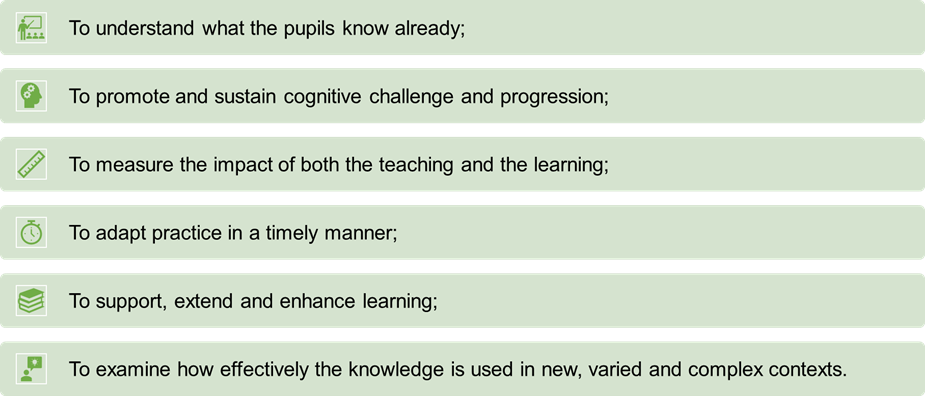
When schools develop successful assessment strategies, they consider the following questions:
Example 1: “purple pen” at Toot Hill SchoolToot Hill School shared how the use of the “purple pen” strategy can be effective in developing the learning and metacognition of secondary-age pupils.
Pupils most commonly receive feedback at three stages in the learning process:
A purple pen can be used to:
Much of the success of this strategy at Toot Hill School can be attributed to the clear teaching and learning strategy which is in place and the consistency of practice across the school. Some schools have used this practice in the past and abandoned it due to inconsistency, lack of evidence of impact or increased workload. At Toot Hill this is not the case as its introduction included a consideration of overall practice and workload. Pupils are fully conversant with the aims and expectations. Subject leaders are well-informed and work together to ensure that pupils moving between subjects have the same expectation. Here we find assessment planned carefully within ambitious teaching and learning routines.
This example of effective assessment demonstrates the importance of feedback within the assessment process. In this example pupils are being assessed but also assessing their own learning. They have greater control of their learning. This practice is particularly effective for more able learners, who will make their own notes on actions needed to improve. They are also influential in promoting good learning behaviours within their classrooms as they model actions needed for improved learning. This practice keeps the focus of assessment on the needs of the learner and the information needed by the learner to become more independent and self-regulating.
Successful assessment practice places the pupil at the heart of the process. Assessment enables pupils to:
Example 2: “closing the loop” at Eggar’s SchoolEggar’s School shared details of an initiative which is being piloted, aiming to improve outcomes in formal assessments. A template for whole-class “feed-forward” sheets has been introduced. This shared template enables teachers to keep a track record of assessments. It also tracks their intentions to adapt their teaching as a result of evaluating student assessments. They are focusing on “closing the loop” in feedback and learning.
The rationale behind the strategy is that it is easier for teachers to:
The approach also allows the Lead Teacher and Curriculum Leader to spot-check progress and discuss successes or concerns with the class teacher.
As this is an emerging practice, the teachers are learning and adapting their practice to make it increasingly useful. The school’s findings include:
This is an example of assessment which is increasing the teacher’s criticality of the teaching and learning process and their expertise within this. The pupils benefit from the focused response to their work and the modelled practice. This exemplifies aspects of assessment used to achieve high-quality teaching:
“Rethinking assessment” across the NACE communityOther NACE member schools shared their experiences, including:
These varied approaches to assessment reflect the different contexts in which teachers work. They include assessment being used in three distinct ways:
 Each of these has a place within teaching and learning. It is important that each type of assessment has a clear purpose and will impact effectively on the quality of teaching and the depth of learning. Pupils need to develop both within and beyond the content constraints of a curriculum. They need to learn about concepts as well as content. They need to understand what they are learning and how it links to other areas of learning. They need to develop cognition and cognitive strategies so that their learning is more useful to them both within school and in life.
The greatest gains can be achieved when the assessment itself is a part of learning and pupils have greater ownership of the process. As assessment practices develop within schools, the aim should be to upskill pupils so that they have the information they need to become self-regulating and to develop metacognitively.
Key factors for successful implementationDuring the meetup, we observed that the schools with well-established assessment practice have introduced this within a whole-school ethos and strategy. Staff and pupils have a shared understanding of the use, purpose and benefits of the practice. Middle leaders are influential in the development of strategy, its consistency and the successful use within a subject specific context. Pupils are at the heart of the model and interact with assessment and feedback to improve their own learning. They develop cognitively and understand their own thinking and learning.
Share your experienceWe are seeking NACE member schools to share their experiences of effective assessment practices – including new initiatives, and well-established practices.
You may feel that some of the examples cited above are similar to practices in your own school, or you may have well-developed assessment models that would be of interest to others. To share your experience, simply contact us, considering the following questions:
Read more:
Plus: NACE is partnering with The Brilliant Club on a webinar exploring the links between metacognition and assessment, featuring practical examples from NACE member schools. Details coming soon – check our webinars page.
Tags: assessment cognitive challenge collaboration feedback metacognition pedagogy progression research |
 Print Page
 RSS
RSS