| Curriculum, teaching and support |
 Blog Home Blog Home
 All Blogs All Blogs
|
|
Guidance, ideas and examples to support schools in developing their curriculum, pedagogy, enrichment and support for more able learners, within a whole-school context of cognitively challenging learning for all. Includes ideas to support curriculum development, and practical examples, resources and ideas to try in the classroom. Popular topics include: curriculum development, enrichment, independent learning, questioning, oracy, resilience, aspirations, assessment, feedback, metacognition, and critical thinking.
Top tags: pedagogy questioning enrichment research oracy curriculum independent learning aspirations cognitive challenge free resources KS3 KS4 critical thinking language literacy assessment English feedback metacognition resilience collaboration confidence maths creativity vocabulary wellbeing access lockdown mindset reading
Adults in school use metacognitive terms when talking freely to each other, exposing children to their natural use. Missed opportunities are openly shared within the teaching team, supporting future developments. Within enrichment groups, metacognition is a transparent process of learning. Children are given metacognitive strategies at the beginning of enhancement opportunities and encouraged to reflect and evaluate at the end. Whether working indoors or outdoors, with manipulatives or abstract concepts and individually or in a group, metacognition is a vehicle through which all learners can access lesson content. We use the ‘Thinking Moves’ metacognition framework (you can read more about this here). Creative application of this framework supports the combination of metacognition words, to make strings of thinking strategies. For example, a puppet called FRED helps children to Formulate, Respond, Explain and Divide their learning experiences. A QUEST model helps children to follow a process of Questioning, Using, Explaining, Sizing and Testing.
Metacognition supports children of all abilities, ages and backgrounds, to overcome barriers to learning. Disadvantage is thus reduced. Moving from intent to implementation
|
||||||||||||||||||||||||||||||||
  
Developing oracy for high achievement: challenges and opportunities |
||||||||||||||||||||||||||||||||
|
Posted By Jonathan Doherty,
13 March 2023 Updated: 07 March 2023 |
||||||||||||||||||||||||||||||||
NACE Associate Dr Jonathan Doherty outlines the focus of this year’s NACE R&D Hub on “oracy for high achievement” – exploring the impetus for this, challenges for schools, and approaches being trialled. This year one of the NACE Research & Development Hubs is examining the theme of ‘oracy for high achievement’. The Hub is exploring the importance of rich and extended talk and cognitive discourse in the context of shared classroom practice. School leaders and teachers participating in the Hub are seeking to improve the value and effectiveness of speaking and listening. They are developing a body of knowledge about provision and pedagogy for more able learners, sharing ideas and practice and contributing to wider research evidence on oracy through their classroom-based enquiries. Why focus on oracy?Oracy is one of the most used and most important skills in schools. To be able to speak eloquently and with confidence, to articulate thinking and express an opinion are all essential for success both at school and beyond. Communication is a vital skill for the 21st century from the early years, through formal education, to employment. It embraces skills for relationship building, resolving conflict, thinking and learning, and social interaction. Oral language is the medium through which children communicate formally and informally in classroom contexts and the cornerstone of thinking and learning. The NACE publication Making Space for Able Learners found that “central to most classroom practice is the quality of communication and the use of talk and language to develop thinking, knowledge and understanding” (NACE, 2020, p.38).
Dialogic teaching’ is highly influential in oracy-rich classrooms (Alexander, 2004). It uses the power of classroom talk to challenge and stretch students. Through dialogue, teachers can gauge students’ perspectives, engage with their ideas and help them overcome misunderstandings. Exploratory talk is a powerful context for classroom talk, providing students with opportunities to share opinions and engage with peers (Mercer & Dawes, 2008). It is not just conversational talk, but talk for learning. Given the importance and prevalence of classroom talk, it would be easy to assume that oracy receives high status in the curriculum, but its promotion is not without obstacles to overcome. Challenges for schools in developing oracy skillsCovid-19 has impacted upon students’ oracy. A report from the children’s communication charity I CAN estimated that more than 1.5 million UK young people risk being left behind in their language development as a result of lost learning in the Covid-19 period (read more here). The Charity reported that the majority of teachers were worried about young people being able to catch up with their speaking and understanding as a result of the pandemic (I CAN, 2021). Another challenge is that oracy is mentioned infrequently in inspection reports. An analysis of reports of over 3,000 schools on the Ofsted database, undertaken by the Centre for Education and Youth in 2021, found that when taken in the context of all school inspections taking place each year, oracy featured in only 8% of reports. The issue of how oracy is assessed is a further challenge. Assessment profoundly influences student learning. Changes to assessment requirements now provide schools with new freedoms to ensure their assessment systems support pupils to achieve challenging outcomes. Despite useful frameworks to assess oracy such as the toolkit from the organisation Voice 21, there is no accepted system for the assessment of oracy. What are NACE R&D Hub participants doing to develop oracy in their schools?
|
||||||||||||||||||||||||||||||||
5 steps to embed metacognition in the early years |
||||||||||||||||||||||||||||||||
|
Posted By Amanda Hubball,
20 February 2023 Updated: 20 February 2023 |
||||||||||||||||||||||||||||||||
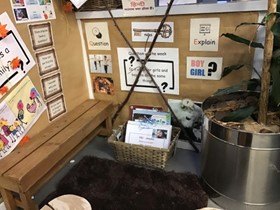
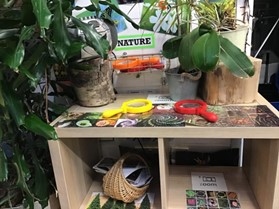
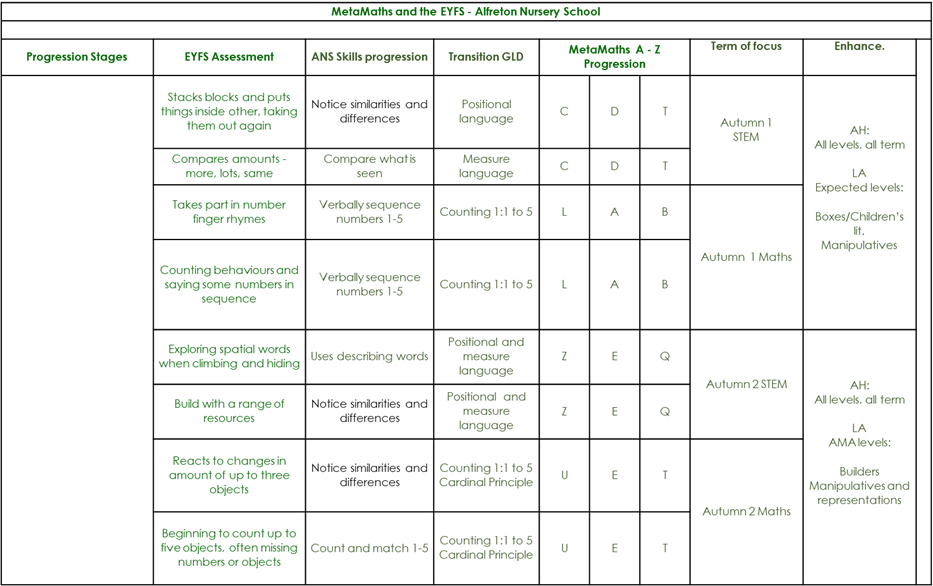
NACE Associate Amanda Hubball, Deputy Head and More Able Lead at Challenge Award-accredited Alfreton Nursery School, shares five key approaches to embed metacognition in the early years. At Alfreton Nursery School metacognition has been systematically embedded across the whole curriculum for the last three years. Through the use of an approach constructed by Roger Sutcliffe (DialogueWorks) called Thinking Moves, we’ve successfully implemented an innovative approach to learning. When we talk about the progression of mathematical understanding we have a shared language. We all understand what it means to engage in addition and subtraction. Phonics, science . . . all areas of learning have a common linguistic foundation. However, when it comes to the skills of thinking and learning, there is no common language and the concepts are shrouded in misconception. Do children learn visually, kinaesthetically . . . ? Are there different levels to learning? Based on the belief that we are all thinking and learning all of the time, Thinking Moves has been implemented at Alfreton Nursery School. Thinking Moves provides the language to explain the process of thinking and has thus provided a common framework on which to master learning. 1. Develop and model a shared vocabularyA shared vocabulary, used by all staff and children, has provided the adults with a tool to explain teaching, and the children with a tool to aid learning. Crucially, the commonality in language means that learning is transparent. For example, when children explain what comes next in a story, they are using the A in the A-Z: thinking Ahead. During the story recall children are using B: thinking Back. The A-Z of Thinking Moves supports children to consciously choose and communicate the thinking strategies they intend to use, are using, or have used to achieve success. Teaching staff build on the more commonly used Thinking Moves words, whilst subtly introducing less familiar terms. The use of synonyms within conversation, to accompany the language of Thinking Moves, supports both adults and children to use the words in context. “I’m going to think ahead, cos I need to choose the bricks I need to build my rocket.” 2. Embed metacognitive concepts in the learning environmentThe learning environment critically supports the children’s use of metacognition. With each word comes a symbol. These symbols are used to visually illustrate Thinking Moves. Children use these symbols to explain what type of thinking they are engaged in and what they need to do next. Through immersing children in the visual world of metacognition, all children – regardless of age and stage of development – are supported in their learning. 3. Break it down into manageable chunksThe A-Z includes some words which slide easily into conversation. Other words are less easily integrated into everyday speech. In order to ensure that a variation of language is incorporated throughout the curriculum, specific areas of the curriculum have dedicated Thinking Moves words. For example, Expressive Art and Design have embraced the metacognitive moves of Vary, Zoom and Picture. This ‘step by step’ strategy gives teaching staff the confidence to learn and use the A-Z in small chunks. Over time, as confidence grows, the use of metacognitive language becomes a natural part of daily discourse. Whether in the staffroom over lunch, planning the timetable or sharing a jigsaw, metacognition has become a part of daily life. 4. Use to support targeted teaching across the curriculumMetacognition is embedded throughout continuous provision and is accessed by all children through personalised interactions. Enhancements are offered across the curriculum and metacognition forms a vehicle on which targeted teaching is delivered. For example, by combining thinking moves together, we have created thinking grooves. By using certain moves together, the flow of thinking is explicit. Within our maths enhancements we use the maths QUEST approach. A session begins with a Question, e.g. “How many will we have if we add one more to this group?” Children Use their mathematical understanding and Explain what they will need to do to solve the problem. The answer is Sized, “Are there more or less now?”, and then this is Tested to establish the consistency of the answer. Maths QUESTs now underpin our mathematical enhancements, allowing children to consciously use maths and metacognition simultaneously. 5. Embed within progression planningWhen looking at the curriculum and skill progression across the school, it has been helpful to consider which Thinking Moves explicitly support advancement. For children to progress in their acquisition of new concepts, they need to know clearly how to access their learning. Within our planning and assessment systems, areas of metacognitive focus have been identified. For example, within literacy we have raised our focus on the Thinking Move Infer. For children to gather information from a story is a key skill for future progression. Within science we emphasise the need to Test and within music we support children to Respond. Progression planning now has a clear focus on cognitive challenge, as well as subject knowledge. Embedding metacognition in the early years supports children to master their own cognition and gives them a voice for life. Further reading:
Plus: Tags: critical thinking early years foundation stage metacognition pedagogy vocabulary |
||||||||||||||||||||||||||||||||
8 key steps for teaching Shakespeare’s language |
||||||||||||||||||||||||||||||||
|
Posted By Zoe Enser,
15 November 2022 |
||||||||||||||||||||||||||||||||
Zoe Enser, author of the new book Bringing Forth the Bard, shares eight key steps to help your students get to grips with (and enjoy!) the symbolic, allusive, musical, motif-packed language of Shakespeare. The language of Shakespeare is perhaps one of the greatest barriers to most readers unfamiliar with its style, allusions and patterns. Shakespeare’s language can be something of a leveller as it doesn’t necessarily matter how proficient you are at reading generally; all students (and indeed many adults) will stumble across his words and need to deploy a different approach to reading than they are used to. With so many finding the language problematic, there is a temptation to strip some of the complexity away; to focus instead on summaries or modern adaptations. There is, though, much to be gained by examining his words as they appear, much as you would when exploring a poem with your class. Getting it can be really satisfying, and a key light-bulb moment for me at school was seeing how unpicking meaning could be looked at like a problem to be solved, much like solving equations in maths or finding the intricate pieces of a jigsaw. Most importantly perhaps is that his use of poetry, imagery and musicality frequently stays with us, and lines from Shakespeare that linger in our mind and our everyday language remain due to their crafting. We want to allow students to have that opportunity too. Here are eight steps to bring Shakespeare’s language to life in your own classroom: 1. Begin by giving students an overview of the plot, characters and themes. Good quality performance, coupled with summary and questioning, will mean students arrive at language analysis ready to see how it relates to these bigger ideas. Audio readings of the plays can also be useful here to allow them to hear the language spoken and to model fluency. 2. Reassure students they won’t get it all immediately. Explain that the joy in studying Shakespeare’s language comes from the gradual understanding we gain and how it enriches our understanding, which is a process: one which even those familiar with his work will continue to go through. It is a process where we layer understanding, deepening each time we revisit it. If students have been used to exploring simpler texts this might be a challenge at first to consider this different approach, but model this for them, demonstrating how you can return to the same quote or extract again and again to delve deeper each time. 3. Look at short extracts and quotes from across a play or a range of texts to examine patterns and connections. Linger on individual words and then trace them as they are used elsewhere so students can notice where these links are and hypothesise as to why. 4. Use freely available searches to explore the frequency and location of key words and phrases. For example, a search on Open-Source Shakespeare reveals there are 41 direct references to ‘blood’ or ‘bloody’ in the play Macbeth, some of which are clustered within a few lines. This provides an opportunity to explore why this is the case and what Shakespeare was doing with these language choices. Equally, looking for references to the sun in Romeo and Juliet reveals 17 instances, and if then cross-referenced with light it brings forth a further 34 references, suggesting that there is a motif running through the text which demands further attention. Allowing students to explore this trail in their discussions and consider the prevalence of some words over others can reveal much about the themes Shakespeare was trying to convey too. For example, simply looking at the light and dark references in Romeo and Juliet enables students to see the binaries he has woven into the play to mirror the idea of conflict. 5. Discuss the imagery Shakespeare is trying to create with his language via pictures, selecting those which are most appropriate to convey his choices at different points. Thinking about how different audiences may respond to these is also a useful way to examine alternative interpretations of a single word, line or idea. This can also support learners with different needs as they have visual images to link to ideas, especially abstract ones, repeated throughout the text. This will provide them with something more concrete to link to the text and, as images are repeated throughout the narrative, can act as support for the working memory and enhance fluency of retrieval as they recognise the recurring images visually. This can be particularly useful for EAL students, supporting them to follow the plot and explore the patterns that emerge. 6. Teach aspects of metre (such as iambic and trochaic pentameter), ensuring students have lots of opportunities to hear the language spoken aloud so they can appreciate the musicality of the language and choice of form. Using methods such as walking the text, whereby students physically walk around the room whilst reading the text and responding to the punctuation, can be a powerful way to convey how a character feels at any given point. Lots of phrases, short clauses, or single syllable words can change the pace of the reading and we should model this and give students the opportunity to examine how this may then impact on performance. Long, languid sentences can create a different performance, and where the punctuation has finally landed in his work can reveal a lot about how a character or scene has been read. Try different ways of reading a single line to illustrate why we place emphasis on certain words and pauses at different points. 7. Read the text aloud together. As well as modelling reading for students, employing practices such as choral reading (where the class all read the text aloud together with you) or echo reading (where they repeat lines back) can be another way in which we remove the barriers the language can create. Students build confidence over time as the language becomes more familiar but also they do not feel so exposed as they are reading with the group, and not alone. 8. Let students play with and manipulate the language so they are familiar with it, and it doesn’t become a block to their interaction with the plays. Pre-teach the vocabulary, letting students consider words in isolation and explore quotes so that they don’t become overwhelmed at trying to interpret them. Even translating short phrases and passages can provide a useful coding activity which can support later analysis. Zoe Enser was a classroom teacher for 20 years, during which time she was also a head of English and a senior leader with a responsibility for staff development and school improvement. This blog post is an excerpt from her latest book, Bringing Forth the Bard (Crown House Publishing). NACE members can benefit from a 20% discount on this and all purchases from the Crown House Publishing website; for details log in to our member offers page. Tags: access confidence creativity English KS3 KS4 KS5 language literacy literature oracy pedagogy reading Shakespeare vocabulary writing |
||||||||||||||||||||||||||||||||
6 ideas to develop oracy in your school |
||||||||||||||||||||||||||||||||
|
Posted By NACE team,
15 November 2022 |
||||||||||||||||||||||||||||||||
This term’s NACE member meetup brought together colleagues from across our network to explore the theme “developing oracy for high achievement”. Following a morning of CPD presentations, the afternoon session was dedicated to sharing examples of effective approaches to developing oracy skills, to support cognitively challenging learning and high achievement. Here are some of the approaches shared: 1. Get all staff members on boardOne common theme from the event was the importance of getting all staff members on board, through a shared vision and whole-school approach. Salusbury Primary School has approached this using the Voice 21 oracy benchmarks, and developed specific inset sessions based on priorities identified through a staff and student survey. A similar approach – again starting with staff and student surveys – was adopted at Maiden Erlegh School, and you can read more about this here. Alongside a shared vision and framework, members highlighted the importance of opportunities for flexibility, innovation, collaboration, feedback, and sharing what’s working across the school. 2. Set and model high expectations for spoken responsesAnother recurrent theme was the setting and modelling of high expectations for spoken responses. This could include insisting on the use of full sentences, accurate grammar, and appropriate tier 2 and 3 vocabulary. To support students with this, approaches include sharing sentence starters with learners, using a “bounce it on” model to collaboratively build discussions, and the use of ethics debates to help learners develop confidence in expressing opinions. There was consensus that such techniques have led to students becoming more confident and accurate in both spoken and written communication. 3. Word(s) of the dayAt Haybridge High School, a dedicated section of the board is used to share key terms relevant to the lesson – including challenging vocabulary and discourse markers to structure talk. The meaning of the words is taught explicitly, with call-and-response vocalisation to aid pronunciation. Learners are then challenged to use these words during discussions within the lesson. Similarly, Harris Academy Beckenham uses a “word of the day”. Students start by vocalising the word together, then using it in a sentence. The word is then revisited throughout the lesson, so all students use the word multiple times in different contexts. Again, members reported increased retention, confidence and accuracy. In addition, the additional vocabulary can open doors for learners to think abstractly or conceptually about a topic. 4. Vocabulary bullseyeAnother approach to developing vocabulary was shared by Brook Field Primary School, where learners play “vocabulary bullseye”. In this game, key words are shown within a bullseye diagram. Children are challenged to use the words to explain a concept – gaining one point for words in the outer ring, two for the middle, and three for the inner circle. Points can be deducted for “umms” and other filler words. This game can be played either with the bullseye diagram visible or hidden, depending on the stage in the teaching sequence. It has led to learners using higher-tier vocabulary more confidently and effectively, in both spoken and written communication. 5. Public speaking clubs and competitionsSeveral schools shared the use of public speaking clubs and competitions, providing further opportunities for learners to develop oracy skills. At Pangbourne College, this has been approached in several ways, including public speaking workshops as part of leadership training for sixth-form students, as well as integration within the Year 9 English curriculum. As part of the latter initiative, learners are taught rhetorical devices, and have the opportunity to plan and delivery speeches, culminating in “The Declamations Cup” competition – complete with prizes and a trophy for the winner. 6. Be consistent (but not “perfect”)Finally, members agreed on the importance of consistency across the school, and ensuring oracy is embedded into everyday routines so that staff and students alike have ample opportunities for practice. Alongside this, several emphasised the importance of ensuring students know they don’t need to be “perfect” when speaking – and that in fact, the more opportunities they have to practice, the more comfortable they become with taking risks and making mistakes. Practice doesn’t make perfect! Read more:
Tags: confidence enrichment language literacy oracy pedagogy questioning retrieval vocabulary |
||||||||||||||||||||||||||||||||
7 steps to establishing a whole-school oracy culture |
||||||||||||||||||||||||||||||||
|
Posted By Chloe Bateman,
07 October 2022 |
||||||||||||||||||||||||||||||||
Chloe Bateman is a Teacher of History at Maiden Erlegh School, a NACE Challenge Award-accredited school. Chloe has recently led the development of a whole-school oracy strategy. In this blog post, she shares some of the ways in which Maiden Erlegh has established and embedded a culture of oracy across the school to benefit all students, including the more able. Oracy is ‘both everywhere and nowhere in a school’. At Maiden Erlegh, we realised that although plenty of classroom talk was taking place, opportunities for this could be ad hoc and students did not always recognise these as opportunities to develop oracy skills. At the same time, a significant number of students lacked the confidence to speak in front of larger groups and in more formal contexts, hindering their ability to engage with oracy-related elements of the taught curriculum and extracurricular activities. The national picture indicates that many schools experience similar challenges to developing student oracy and an oracy culture within the school. Drawing on our experience, here are seven steps to establish a whole-school oracy culture: 1. Investigate your context to determine your prioritiesEvery school is different. Whilst the national trend shows a decline in oracy as a result of the Covid-19 lockdowns, every school will have different areas of strength and development in terms of the current oracy level of their students and their staff confidence in teaching to enhance oracy. Oracy too is itself a complex skill, made up not just of the verbal ability, but multiple components such as the physical and cognitive elements. To design a strategy which really works for your context, it is beneficial to gather student and staff voice to inform the precise nature of this. At Maiden Erlegh, we conducted quantitative and qualitative staff and student surveys, asking students to rate their level of confidence when communicating and why they may feel less confident in some areas than others. Staff were asked to share feedback on levels of student oracy and what support they would need to feel confident in developing an oracy culture in their own classrooms. From this data, we could easily identify clear priorities to be addressed through our strategy. 2. Secure buy-in from staff to secure buy-in from studentsA strategy is only as effective as those who make it a reality on a day-to-day basis: the teaching staff. Our oracy work was launched via a training session to staff which centred on communicating the rationale for our new oracy focus. Here the student and staff voice surveys came into their own, enabling us to explain why we needed to develop oracy using the words of students and staff themselves and showing the overwhelming statistics. We also took time to share the wide-ranging holistic benefits of enhanced oracy for students, including for mental health, academic progress, and career opportunities. For maximum exposure, include students in the launch too and keep them as informed as you would do staff. We delivered assembles to all students sharing very similar messages to those shared during the staff launch, ensuring students were aware and engaged with our upcoming work. 3. Get staff and students on board with ‘quick wins’It can be tempting to try to launch all strands of a strategy at once. However, this is unlikely to succeed in the long run as it risks overwhelming the very people you are attempting to get on board. Instead, generate enthusiasm and interest in oracy by sharing ‘quick wins’: low-preparation, high-impact activities to integrate more oracy opportunities into lessons. Staff and students loved our ‘no filler’ game in which students were challenged to answer questions or speak about a relevant topic without using filler words such as ‘erm’, ‘like’, and ‘basically’. As staff become more confident in creating their own oracy-based activities, encourage colleagues to share their own ‘quick wins’ via staff briefings and bulletins to build a culture of enthusiasm. 4. Give oracy an identityToo often strategies and initiatives can be become lost in the organisational noise of a school and the day-to-day challenges and immediate priorities. Borrow from the world of marketing and promotions to create a clear identity for oracy by designing a logo and branding for your strategy using a simple graphic design website such as Canva. A catchy slogan can also help to build a ‘brand’ around the strategy and increase staff and student familiarity with the overall vision. At Maiden Erlegh School (MES), we use the slogan ‘MES Speaks Up!’ – a motto that has become synonymous with our vision for a culture of oracy across the school. 5. Establish and reinforce consistent high expectations for oracyMost schools have shared and consistent high expectations for students’ literacy and numeracy, but how many have the same for oracy? Whilst many teachers will have high standards for communication in their classrooms, these will not have the same impact on students as if they are school-wide. At Maiden Erlegh, we established a set of ‘Guidelines for Great Oracy’, a clear list of five expectations including the use of formal vocabulary and projecting loudly and clearly. These expectations were launched to both staff and students and all classrooms now display a poster to promote them. The key to their success has been clearly communicating how easily these can be embedded into lessons, for example as success criteria for self- and peer-assessment during oracy-based activities such as paired or group discussions. 6. Create a shared understanding that oracy will enhance the existing curriculumWith so many competing demands on a classroom teacher’s time, it is easy to see why strategies and initiatives which feel like ‘add-ons’ can miss the mark and fail to become embedded in a school’s culture. Central to the success of our oracy strategy has been raising staff, student, and parent awareness that a focus on oracy will enhance our existing curriculum, rather than distract from it. From the very beginning, staff have been encouraged to return to existing lesson activities which cover existing content and adapt these with oracy in mind. In History, for example, an essay was preceded by a parliamentary debate to help students to construct convincing arguments, whilst in Maths students developed complex verbal explanations for the processes they were performing rather than simply completing calculations. Not only do such activities support oracy skills, but they demonstrate the inherent importance of oracy across the curriculum and allow departments to better meet their own curricular aims. 7. Keep the momentum going with high-profile eventsAs with any new strategy or initiative, we realised that after the initial enthusiasm there was a potential for staff and students to lose interest as the year wore on. To combat this, we developed high-profile events to return oracy to centre stage and engage students and staff alike. In May, we held MES Speaks Up! Oracy Month – a month of activities focused on celebrating oracy and its importance across all aspects of school life. In form time, students were challenged to discuss a topical ‘Question of the Day’ from our ‘Discussion Calendar’ to get them communicating from the moment they arrived in school. Every subject dedicated at least one lesson during the month to an activity designed to develop and celebrate oracy skills, including public speaking, debating, and presenting. Outside of lessons, students from each year group participated in a range of extracurricular parliamentary debates on issues relevant to their age group. All of these activities were widely promoted via our school social media to generate a buzz around oracy with our parents and guardians. References
Interested in developing oracy within your own school?
• Join our free member meetup on this theme (18 October 2022) Tags: campaigns confidence curriculum enrichment KS3 KS4 KS5 language oracy pedagogy personal development questioning vocabulary |
||||||||||||||||||||||||||||||||
Reading well: 3 suggestions to support children’s reading and mental health |
||||||||||||||||||||||||||||||||
|
Posted By ImpactEd,
22 June 2022 |
||||||||||||||||||||||||||||||||
New research from ImpactEd has found that pupils who have high confidence in and enjoyment of reading have higher wellbeing and lower anxiety than their peers. In this blog post, the ImpactEd team share insights from the research, and suggestions as to how schools and families can support children’s reading and mental health. At ImpactEd we recently released a piece of research (in collaboration with the National Literacy Trust, TutorMate and Place2Be), which looked at the relationship between reading and wellbeing for young people across England. In an educational landscape recovering from the impact of the Covid-19 pandemic, with ongoing concerns about unequal loss of learning due to school closures and concerns for children’s post-pandemic mental health, we believe this research, which explores the relationships between pupils’ reading experiences, attitudes and behaviours and their mental wellbeing, is hugely timely and important. We surveyed almost 30,000 pupils and findings show that pupils who scored a five (the highest score) in confidence in reading had wellbeing levels that were over 30% higher, and anxiety levels that were over 20% lower than pupils who scored a one (the lowest score). Similarly, pupils who enjoyed reading very much had wellbeing levels that were over 6% higher than those who didn’t enjoy reading at all. We spoke to partners who contributed to this research to get their perspectives on the implications for children, schools and families, and they shared some valuable suggestions on what educators, parents and carers can do to support children’s reading and mental health. 1. Read little and oftenTo support children to develop their reading, and thus support their emotional wellbeing, Emma Bell, Executive Director at Innovations for Learning UK, suggests a focus on reading “little and often”, rather than making reading a chore. In the video below she shares that reading can often be integrated into things families are already doing, such as reading recipes, road signs or subtitles on the telly. She notes that these small activities can have a big impact, and create a positive reading culture. 2. Talk to older children about their readingOur research also revealed that pupils frequently want support with their reading, regardless of their age. While many pupils mentioned reading directly with family members (“I would like my family to read with me, especially my little sister”) older pupils’ suggestions for support included parents and carers asking them questions about what they are reading, and giving or suggesting books that they might enjoy (“Ask me questions about what I’m reading so I can answer and express my feelings on the book”). Jonathan Douglas, CEO of the National Literacy Trust, references these comments when he shares in the video below that “no child is too old to be engaged” in reading. He refers to suggestions mentioned in the research, noting that a great way to support children’s education and wellbeing is by initiating conversations with them about their reading.
3. Use stories and characters to open up discussions about mental healthSome more suggestions for supporting children’s reading and mental wellbeing are given by Dr Julia Clements, Principal Educational Psychologist at Place2Be in the video below. She suggests that when reading with children, adults could discuss any challenges that characters in the book are going through and open up a conversation about what they can do when faced with difficult situations in life. This could support children with their understanding of and resilience towards challenging situations.
Read more...For more findings from our research into reading and wellbeing, and more suggestions on how to support children’s reading at school and at home, the full report is available here. References
Tags: English literacy literature oracy parents and carers reading research student voice vocabulary wellbeing |
 Print Page
 RSS
RSS